What is Notebooking?
Notebooks and shutterbooks (aka Lapbooks TM) are terrific projects for documenting real-life learning. They’re great for relaxed homeschooling, because they allow for the children’s uniqueness and innate creativity, rather than expecting an “inside-the-box” outcome. I highly recommend that every homeschool parent learn about notebooking and shutterbooks.
Notebooking is compiling a variety of work on a given topic into a single collection, which is bound together in some manner to create a presentable book.
Personally, I lean toward shutterbooks for young students and notebooks for older students, as a general rule. Shutterbooks are often more visually interesting and more hands-on in their actual construction, but notebooks allow for lengthier information and more writing.
What is a Shutterbook?
A shutterbook is usually made from a file folder. The folder is opened up sideways (like a book), and the outside edges are folded in to the center crease to resemble window shutters or French doors. (They’re occasionally constructed from heavy paper instead of file folders.) This forms the skeleton of the book. Additional flaps may sometimes be attached, as well, to create more space.
The information the student gathers is placed into miniature books and other graphic organizers, and these smaller components are adhered to the inside of the shutterbook. It is a “book of books.” Pockets, wheels, pop-ups, and other visually-appealing information-holders are frequently included and the shutterbooks are thoroughly illustrated. Every shutterbook will be different.
People often refer to these as “lapbooks,” but Lapbook is a trademarked term.
What is a Notebooking?
A notebook is simply a compilation of all the information the student acquires, and smaller projects the student has completed. It’s designed to be a “final product,” so it provides a goal for the student and encourages careful work. Miniature books, such as those found in shutterbooks, are usually not included in notebooks, but there’s no reason they can’t be.
Notebooks are usually “regular paper” size, and well-suited for reports, worksheets, etc.
What Should I Include?
Because the notebook or shutterbook is a portfolio of the student’s work, it should provide a snapshot of what he learned during his study of the subject (whether that learning was structured or not). Writing, drawings, and graphs may be included, along with lists (of books read, new vocabulary, etc.) and/or photographs of projects of the sort that don’t fit inside a book!
Depending on the situation, you may want to include a list of questions the student wanted, prior to study, to find answers to, and a list of new facts the student acquired. Older students, in particular, should probably incorporate some sort of bibliography. (We start learning about bibliographies with younger students, writing a simple list of books on the back of the shutterbook.)
For younger students, you may want to add a pocket for “mom’s notes” — things you know the child learned, but which he might not think to document himself. If the student learned it or did it during a particular course of study, there should be a way to include it in the shutterbook/notebook.
Where Do I Get Ideas?
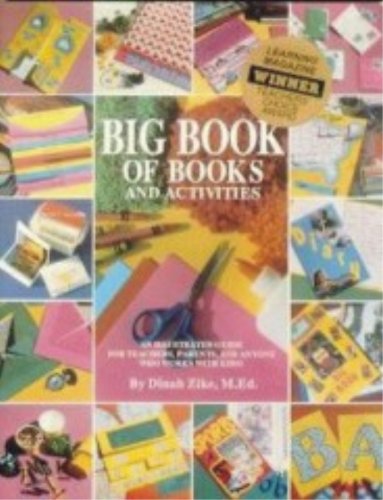
For shutterbooks, you’ll need ideas for minibooks. Dinah Zike’s Big Book of Books is the ultimate resource for this. (She has other, similar books, as well.) You can also look online for minibook ideas. Notebooks are not as difficult to find ideas for, as most 2-dimensional projects will fit in them.
You may want to store them in 3-ring binders, or have them comb- or spiral-bound.
Big Book of Books and Activities (at Amazon)Productive Homeschooling (formerly Notebooking Pages.com)

What Resources Should I Use?
Anything you can find!
Seriously, there are a ton of resources which are not designed specifically for shutterbooks/notebooking, but which work beautifully.
- Most scrapbooking tools and supplies can be incorporated.
- Clip art can be used for illustration.
- Coloring pages are terrific for little ones.
- Handwriting sheets can be useful.
- Nearly any graphic organizer you can think of can be incorporated in some way into some notebook.
- Timelines and/or timeline figures work nicely.
- Consider magazine clippings, photographs, drawings, a variety of paper, and thin 3-dimensional objects.
In Conclusion
The end result is a project your child will be proud to show to friends and family, and proof that he really is learning!

[…] might be — like the farm ones.) Taken all together, they can also be used in notebooks or lapbooks/shutterbooks for My Father’s World kindergarten or other, similar topical studies. As I mentioned, I […]